With 74 years of experience, KFC is arguably the original fried chicken brand, and its creative assets are unmistakable across the 150-plus countries and territories in which it operates (and probably in nations it has yet to tap). From Colonel Sanders with his iconic white suit and black ribbon tie to the fried chicken bucket lined with red and white stripes, one doesn’t need to see the logo to know it’s KFC.
So, when the brand asked JKR to help define its next chapter, the agency saw the opportunity from the jump.
“Most brands would kill for even one of the most distinctive assets in the world. KFC has six – the Colonel, the bucket, the stripes, the lettermark, Finger Lickin’ Good, the chicken itself. That’s an extraordinary hand to be dealt,” said JKR Global Executive Creative Director Sean Thomas. “But it also creates a real challenge. When everything is everywhere all the time, nothing lands.”
But JKR has a storied history of coaxing brand evolutions. Walmart’s spark? JKR did that. Stella-Artois’ high fashion-meets-late night pizza and beer? Yup, that was them. Dunkin' dropping "Donuts" without losing an ounce of its personality? Also them. Since 1961, global chicken consumption has quadrupled, making the protein the most popular among meat eaters, so KFC’s proverbial chicken coop was getting crowded with competitors. And its elements were recognizable, but there was opportunity to ensure they'd continue resonating for generations to come.
“This is what we do; it’s what we’re known for. The work wasn’t just about amplifying what’s iconic,” he said. “It was about giving each asset a clearer role, a more intentional presence, so the whole system hits harder than the sum of its parts.”
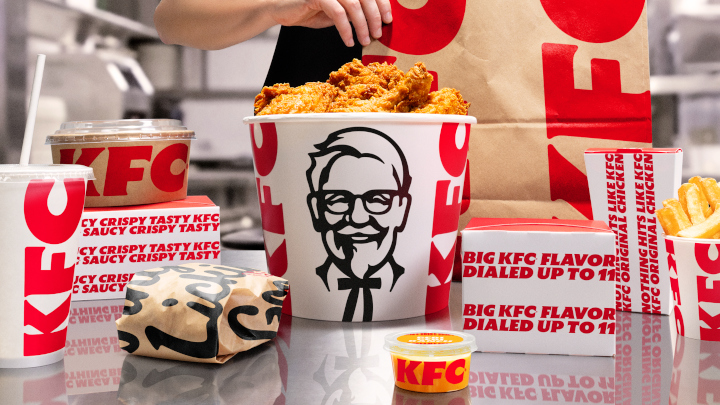
So, what changed? The Colonel got a neckline. The stripes became type. The bucket became a frame for creativity and culture. Two new colors were introduced: a green (aka herbs) and an orange (aka spices). And astute fans can spot a drumstick hidden inside the “KFC” logo.
Every element had to play well on a global stage, so JKR and KFC invited representatives from its 14 business areas to weigh in. “Local markets weren’t handed a direction to approve,” Thomas said. “They were in the room from day one. That’s not the norm in global brand work, and it shows in the result.”
Customers approved of the new direction as well, calling the new identity “modern, relevant and culturally connected” without losing the familiarity and emotional connection they already had with KFC.
That’s not to say that JKR and the brand were in lockstep throughout the entire process. “The best work came from that tension,” Thomas said. “At the concept stage, we pushed hard on where KFC could go. Some directions were genuinely interesting, but when something stopped feeling like KFC, it stopped feeling right. I mean, the Colonel is not just an iconic brand symbol; he was a real icon. We knew finding the right balance between heritage and today’s culture was going to be key.”
The result from that tension is a unified experience built around the bucket, designed to bring chicken back to the heart, connect with culture and create a more distinctive, expressive and modern KFC.
“Stripes as type” appear as parking spots, and the bucket becomes an actual building. Online and in the app, the elements are animated, always moving like the brand they represent. Even tone of voice got a glow-up, now defined as playfully witty, magnetically candid and deliciously confident.
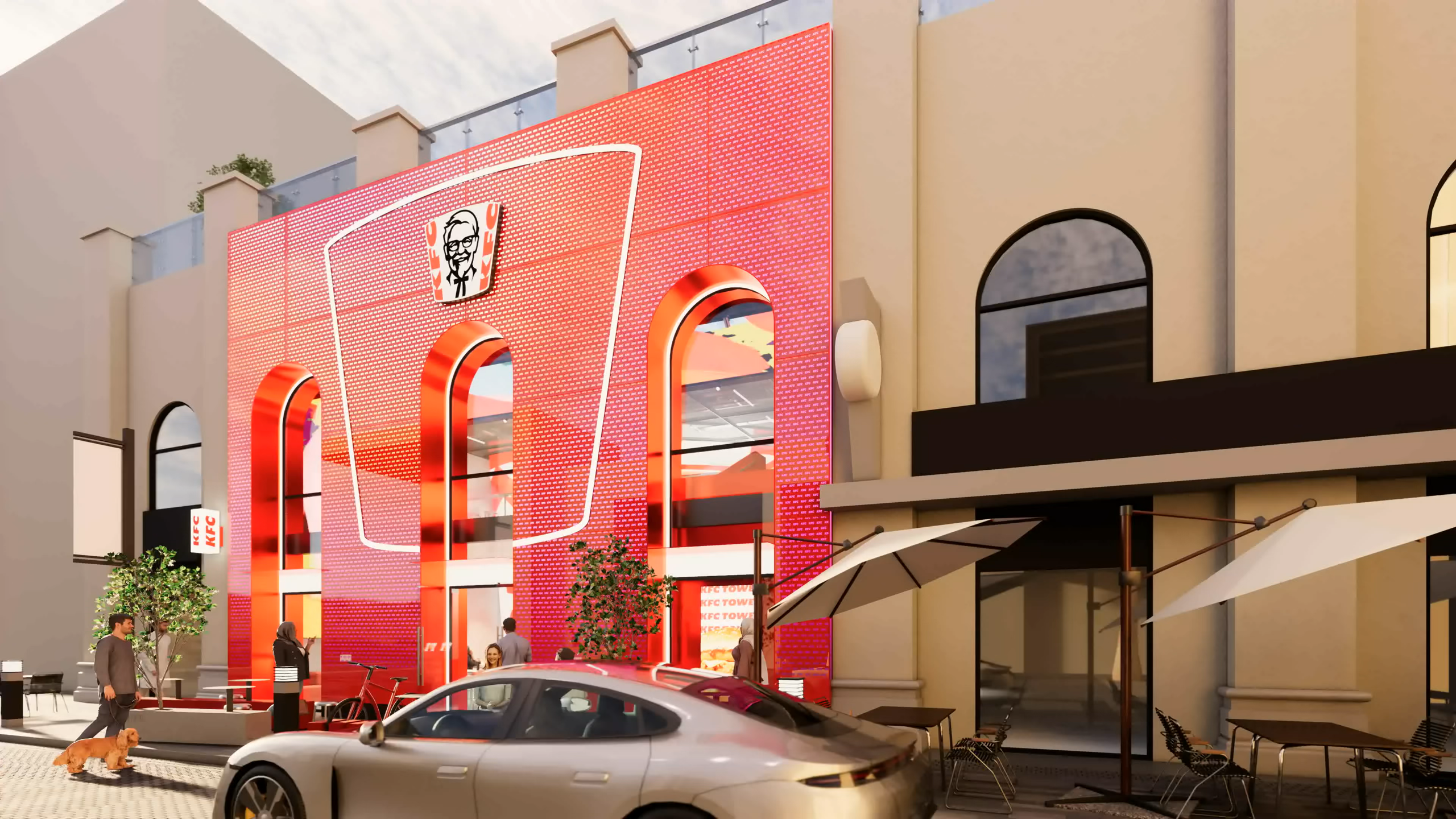
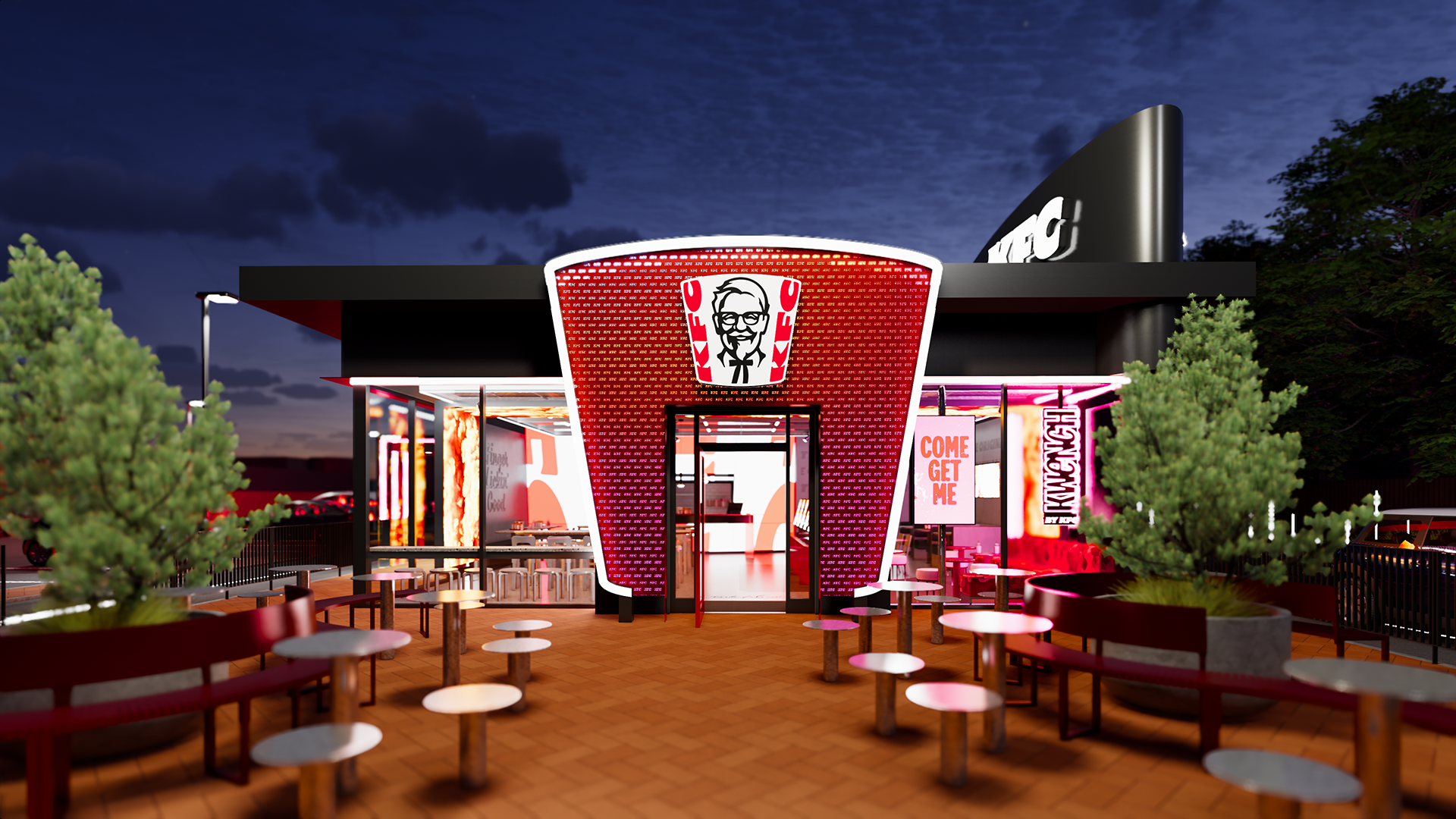
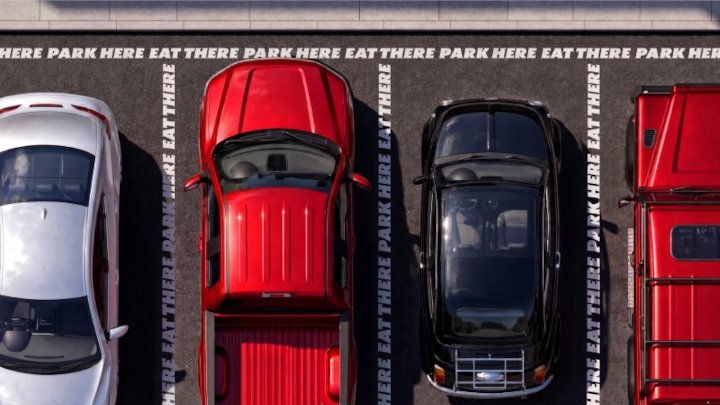
“What we’ve designed isn’t a new look. It’s a new standard,” Thomas said. “Every element of this system from the app to the restaurant environment to the packaging, is built around the idea that experience is the brand. That’s the shift from QSR (quick-service restaurants) to QXR (quality experience restaurants). You’re going to see next-level hospitality, crave-worthy content and culture-defining activations. And it matters because in a crowded category, distinctiveness at the product level only gets you so far. The brands that win long term are the ones that make you feel something at every touchpoint.”
And initial reactions indicate that the KFC x JKR work is giving customers all the feels.
“My job is not to reinvent KFC. It’s to keep it forever young,” KFC Global Chief Concept Officer Christophe Poirier said. “The response to the new brand visual identity has been overwhelmingly positive, with people noting that we kept what makes us iconic while breathing new energy in the brand. And that’s something I’m immensely proud of.”
Photography and Videography Asset Usage Notice – Limited-Term License
-
The lifestyle and food photography assets and illustrations made available for the Visual Identity are licensed for a limited period only. The license period expires on April 26, 2029.
-
BMUs, franchisees, licensees, agencies, publishers, contractors, outlet designers, and other third-party partners may use these assets only for approved KFC brand purposes, only during the applicable license period, and only in accordance with the applicable brand guidelines and usage instructions.
-
Once the license period expires, the assets must no longer be used, published, reproduced, distributed, displayed, adapted, stored for active use, or made available for download. Each BMU/Franchisee is responsible for ensuring that the assets are removed from local systems, websites, social media libraries, publisher platforms, and any other external or third-party channels where the assets may have been used. To the extent any materials are retained solely for archive, audit, legal, or record-keeping purposes, they should be clearly marked as expired and not approved for any further use due to licensing restrictions. The materials should not be accessible for active marketing, design, publishing, promotional, or operational use, and appropriate controls should be in place to prevent future use.
-
No party should assume that the assets may continue to be used after expiration unless KFC Global confirms in writing that the applicable rights have been renewed or extended.